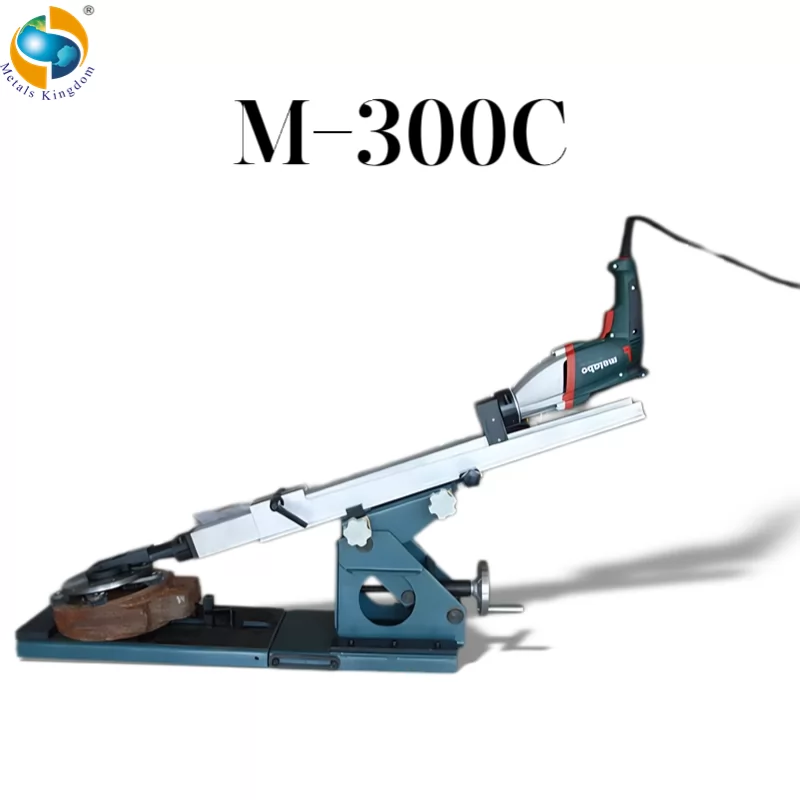
In aviation maintenance, valve seat grinding is a precision task that directly affects sealing quality, operational reliability, and turnaround time. For teams working under strict schedules, the essential requirement is not just surface finishing, but a tool that can restore valve seats accurately, repeatably, and without adding unnecessary disassembly work. The product line on valvegrindingmachine.com reflects this practical approach by emphasizing portable valve grinding machines, stable clamping structures, adjustable speed, and solutions designed for on-site repair.
Although the site is positioned broadly for industrial valve maintenance, its product structure is especially relevant to aviation service workflows that demand compact, controllable, and easy-to-deploy equipment. The company presents portable valve grinding machines, stationary valve grinding machines, valve test benches, and pipe cutting and beveling machines as part of a larger maintenance toolkit. That combination suggests a workflow centered on repair, verification, and preparation rather than isolated grinding alone.
One of the clearest strengths of the portable models is their compact design. The MJ-300 portable valve grinding machine is described as lightweight, easy to carry, simple to install, and suitable for complicated on-site repair environments. It uses a combined structure that simplifies assembly and disassembly, helping maintenance teams work efficiently when a full valve teardown would be costly or time-consuming. In aviation settings where access is often limited and downtime must be minimized, those characteristics carry obvious value.
The technical structure of the MJ-300 also shows a strong focus on control. The machine includes a grinding diameter range of DN20-300 mm, a spindle speed range of 0-900 and 0-2800 rpm, a maximum grinding depth of 450 mm, 220 V/50Hz power supply, and 1100W motor power. These details matter because valve seat finishing depends on matching the machine’s motion and tool head to the seat geometry, with enough flexibility to handle different working conditions.
The site also notes that the MJ-300 is used for plane globe valve seats and safety valve seats, which is important for aviation-related maintenance contexts where precise seat sealing is critical. The machine’s operation relies on a three-claw frame, probe arm assembly, and selected grinding head or sandpaper, allowing the operator to position the tool precisely against the sealing surface. That design supports accurate contact, controlled pressure, and stable finishing during the grinding cycle.
Another notable feature is the machine’s layered grinding process. The site describes coarse grinding, accurate grinding, and polishing with progressively finer sandpaper. Coarse grinding removes grooves, pits, and scratches; accurate grinding clears finer defects; polishing completes the sealing surface. This step-by-step method is particularly useful when the goal is to restore a seat while preserving geometry and minimizing unnecessary material removal.
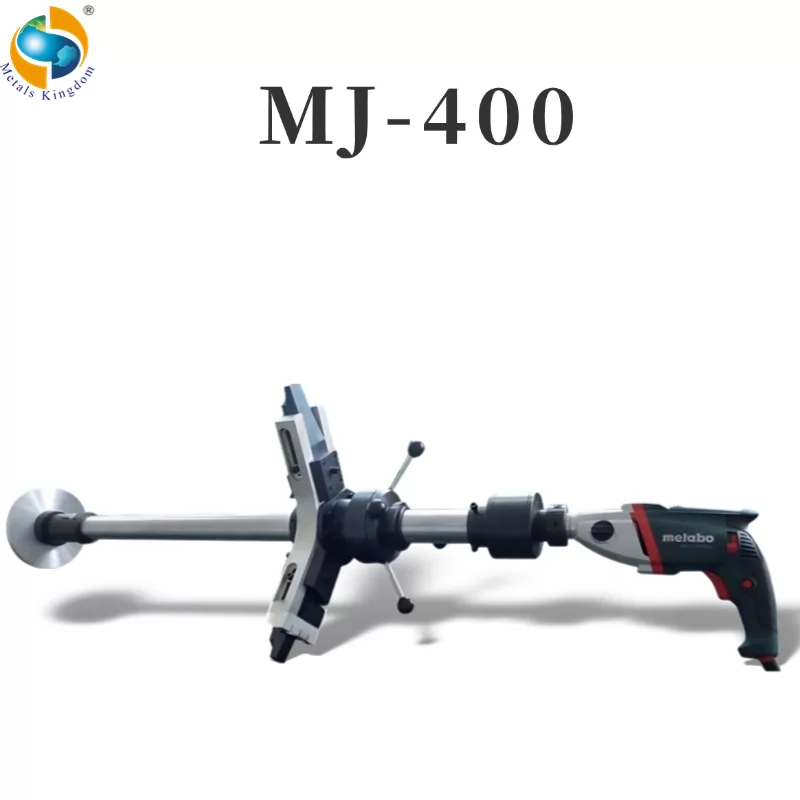
For larger or heavier-duty tasks, the MJ-400 portable valve grinding machine extends the concept with a grinding diameter of DN100-400 mm and a maximum grinding depth of 850 mm. The machine is also equipped with a three-paw frame, adjustable speed motor, telescopic sleeve, and universal coupling. These features are designed to reduce labor intensity, improve efficiency, and maintain stability during operation. In practical terms, they allow the machine to adapt to a broader range of valve sizes and working conditions.
The MJ-400 description also highlights positive and negative motor rotation, adjustable axial pressure, and high repositioning accuracy after sandpaper replacement. Those details suggest that the equipment is intended for repeatable maintenance work, where the same seat may need multiple stages of finishing. For aviation maintenance teams, repeatability is a core requirement because a repaired valve seat must perform consistently once returned to service.
The operating notes on the site further reinforce a maintenance-first philosophy. The instructions explain how the probe arm, grinding head, and frame components are assembled, how the operator should adjust the contact position, and how different grinding heads are selected for plane valve seats or cone valve seats. The site also outlines the use of coarse, accurate, and polishing stages, showing that the process is designed to be systematic rather than improvised.
From a procurement perspective, the value of these aviation valve seat grinding solutions lies in their portability, flexibility, and support for on-site repair. By reducing the need to transport valves to a separate workshop, the equipment helps lower maintenance cost and shorten service interruption. The company’s product messaging consistently emphasizes reduced labor intensity, improved labor efficiency, and suitability for complex environments, which aligns with the needs of aviation maintenance organizations that must balance precision and speed.
In short, Aviation Valve Seat Grinding Solutions on valvegrindingmachine.com are built around a clear idea: maintain precision without sacrificing mobility. With portable machines, adjustable speed, three-claw fixation, and a staged grinding process, the site presents a practical solution set for technicians who need dependable valve seat restoration in demanding maintenance environments.
Copyright © Metals Kingdom Industry Limited All Rights Reserved