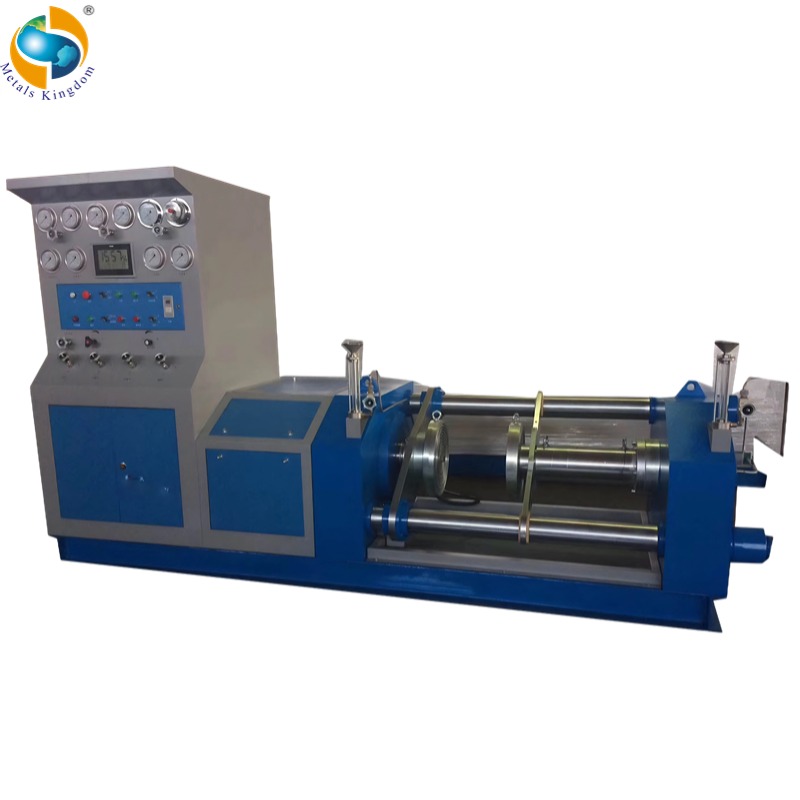
A standard valve test bench works until your valves stop fitting it. The size range is wrong, the test pressure is higher than the catalog allows, the medium is nitrogen instead of water, or a production line needs the bench to test twenty valves an hour without an operator turning a hand wheel. That is when a bench has to be designed around the valves, not the other way round.
Metals Kingdom designs and manufactures custom valve test benches for exactly those cases. We have built valve and pipeline testing and repair equipment since 1994. Our custom range covers valves up to DN800 (32 in), with other sizes, pressures and media evaluated on request. A bench can run high-pressure and low-pressure tests, shell and seat leakage tests, backseat tests, stem gland tests and combined total-performance tests, with water, air, nitrogen or oil, in manual, semi-automatic or fully automatic operation. If you only need a conventional bench, our valve pressure test benches cover the standard configurations.
The mechanical structure decides how a valve is loaded, clamped and sealed. We build four, and each one suits a different job.
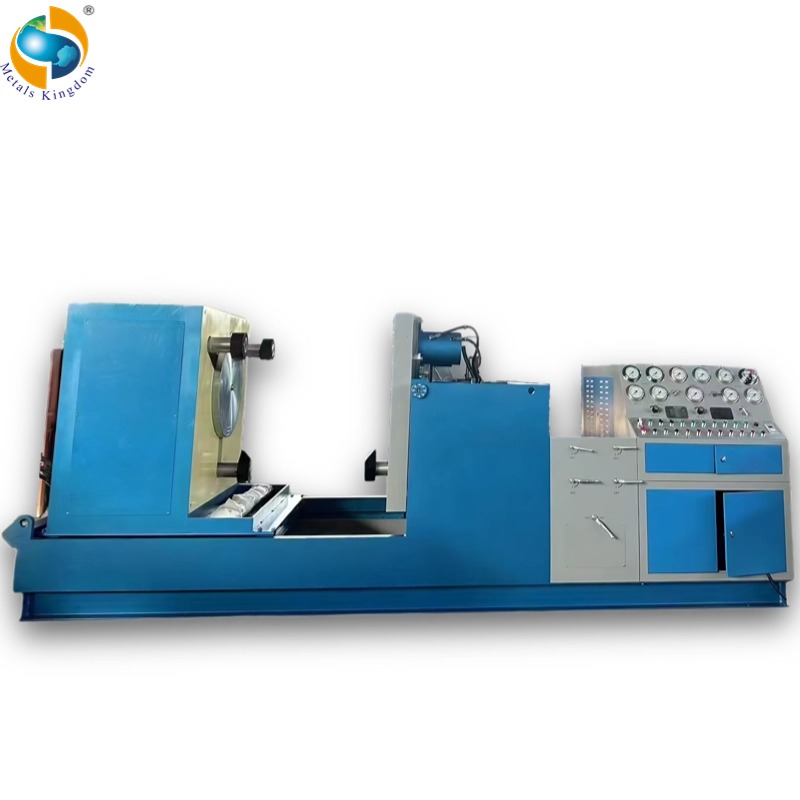
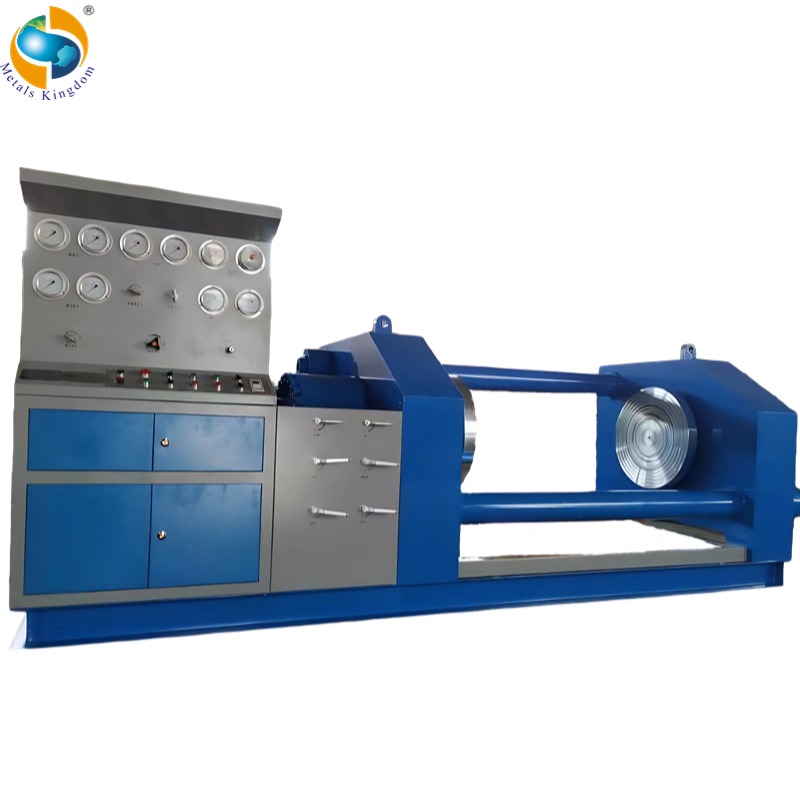
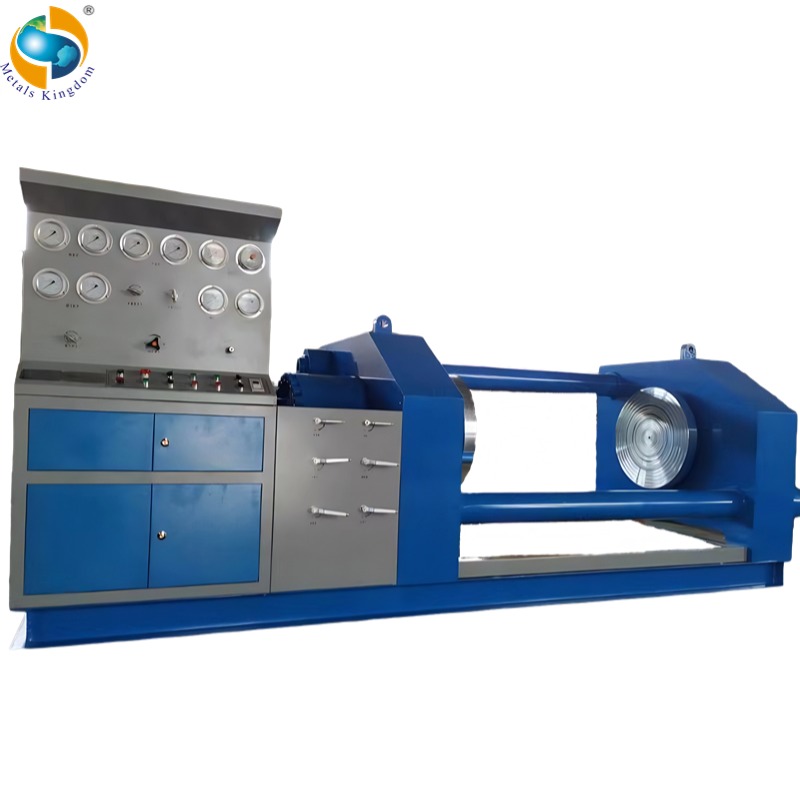
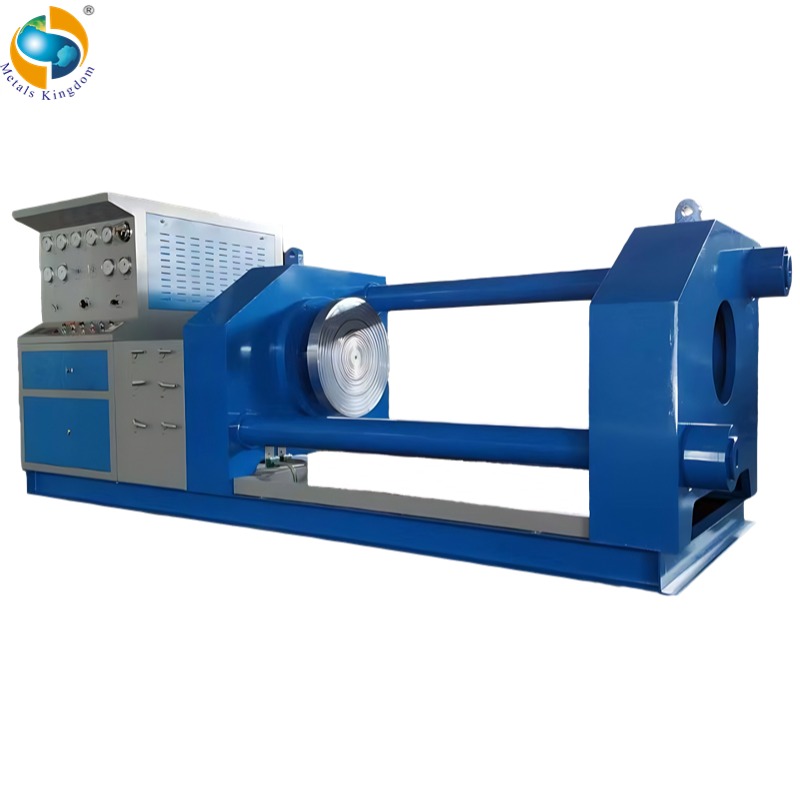
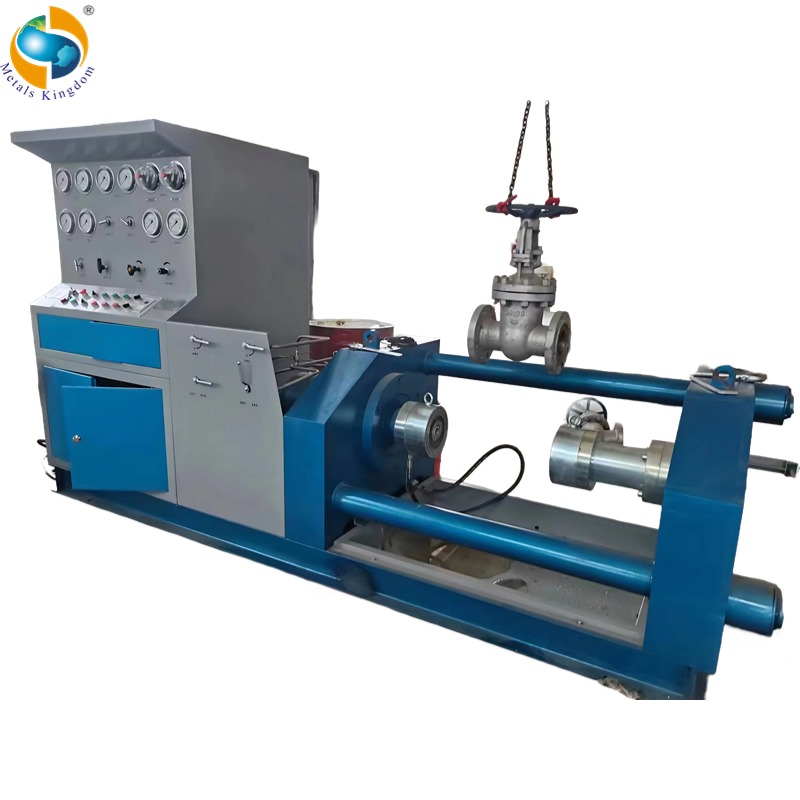
The valve lies horizontal and is clamped axially from its ends with hydraulic force. This is the right structure for straight-through flanged and welded valves, including larger bodies, because the axial clamp carries the end load of the test pressure. It is the usual choice for gate valves and other long valves, and for large valve sizes.
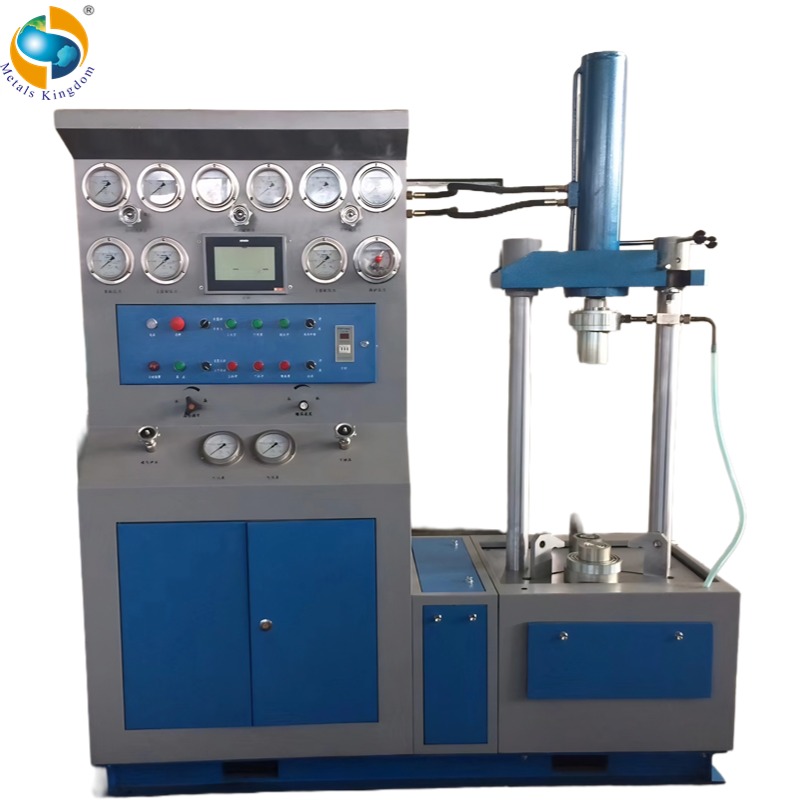
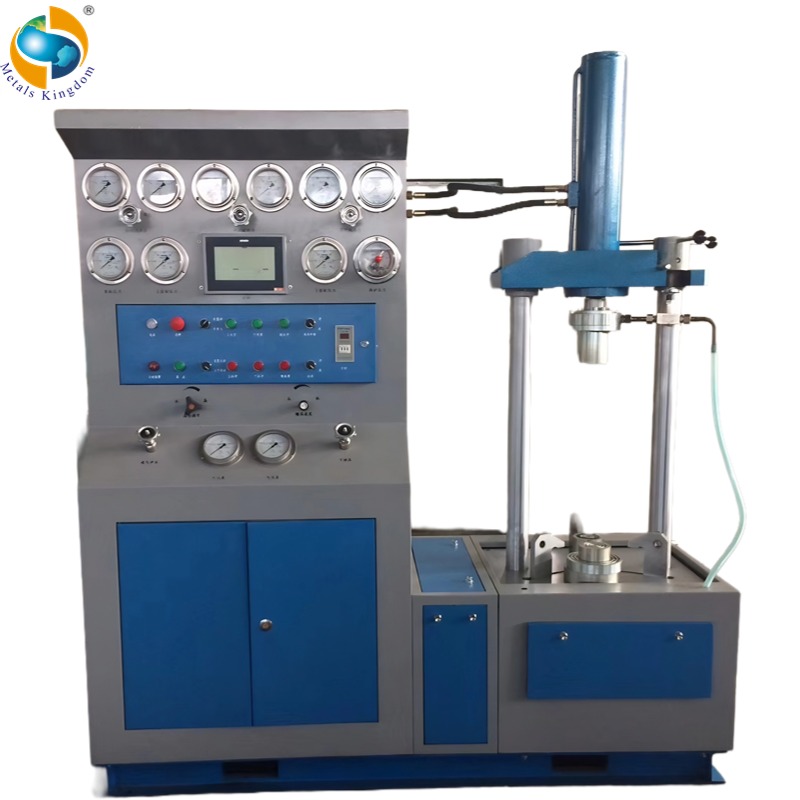
The valve stands vertical and is held by top-pressure clamping. It suits smaller valves and workshops where vertical loading fits the handling process, and it uses less floor space than a horizontal bench.
A dual-station, flip-type clamping arrangement turns the valve so that seat tests from each direction can run without taking the valve out and re-mounting it. Choose this when your procedure tests both sealing directions and you want to save repositioning time.
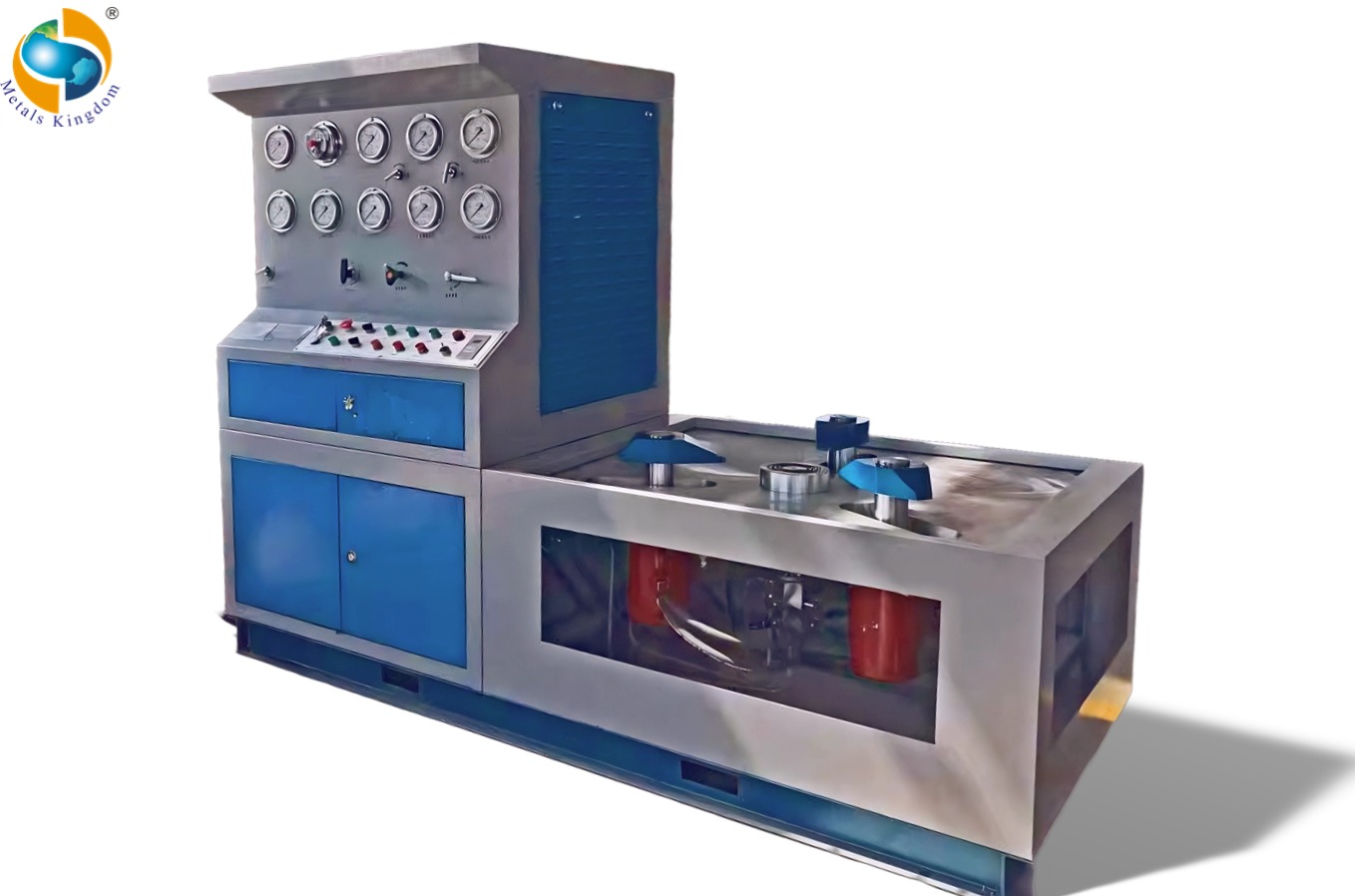
Safety and relief valves are tested differently. The bench has to check set pressure, opening pressure and seat tightness, so it has its own clamping and pressure-control arrangement rather than the shell-and-seat setup of a conventional bench.
For special valve constructions or an unusual workshop, we can combine these structures or design a special arrangement from your valve drawing.
Water is the usual medium for shell and seat tests, because a hydrostatic test stores little energy and is safer if something fails. Air and nitrogen are used where a standard calls for a gas seat test, where water residue is unacceptable, or for low-pressure leakage checks. Oil is available where the application requires it. Each medium needs its own pressure generation and safety arrangement, so we confirm the pressure range for each medium separately instead of promising one pressure for all of them.
The pumping system is built to the test sequence. A high-pressure water pump system raises the shell test pressure, a low-pressure water pump system handles filling and low-pressure steps, and a gas supercharging system is available when you need pneumatic tests at higher pressure. Multi-stage tests that move from low to high pressure are configured in the control logic.
Special projects go further. Our information includes a 150 MPa ultra-high-pressure configuration built for Christmas tree valve testing. That is a project-specific design for wellhead valves, not the rating of every bench. For a high-pressure or wellhead project, send the valve type, pressure class, medium and test procedure, and we will engineer the system to the requirement.
The clamp must hold the valve still, seal both ends, and carry the end load of the test pressure without distorting the valve. Three clamping arrangements are available: hydraulic axial clamping for horizontal benches, vertical top-pressure clamping for vertical benches, and dual-station flip clamping for the double-hold bench.
Sealing is where many benches fail in practice. The sealing heads and adapters must match the end connection: flange dimensions and sealing faces for flanged valves, valve-end geometry for welded ends, thread dimensions for threaded connections.
To design the clamping, we need the nominal diameter and pressure class, the face-to-face dimension, the end-connection dimensions, the body shape and weight, the clamping direction you want, whether internal or external sealing adapters are needed, and how valves will be loaded and unloaded. A valve drawing at the design stage saves a lot of rework later.
Manual fits low testing volumes, a mix of many valve types in small numbers, and workshops that want the operator in full control of each step.
Semi-automatic fits regular testing of several valve models. Selected steps such as pressurizing, holding and releasing are automated while the operator loads the valve, confirms and inspects.
Fully automatic fits repetitive production testing with a defined sequence, where the bench runs the clamp, the pressure steps and the hold times on its own.
When you compare proposals, compare the complete system, not just the frame. A custom proposal normally itemizes:
The mechanical bench that supports the valve
The clamping assembly and its hydraulics
Sealing adapters for your end connections
High-pressure and low-pressure water pump systems
A gas supercharging system, if you need gas testing
Piping for the chosen medium
A control system matched to manual, semi-automatic or fully automatic operation
Measuring instruments for the test parameters
Operator safety protection suited to the pressure and medium
The supply scope is set in the technical proposal, and not every component is part of every configuration.
Requirements: you tell us the valve types, sizes, test pressures, media and test functions.
Technical review: we study your drawings, end connections, clamping needs and operating conditions.
Structure: we choose the horizontal, vertical, flipped double-hold or special arrangement.
System configuration: we set the pump system, medium circuits, clamping and automation level.
Design confirmation: we agree the technical parameters and the supply scope with you.
Manufacturing: we build the equipment to the confirmed specification.
Inspection and delivery: we confirm the inspection requirements, documents and delivery under the agreed order.
If you need specific test records, inspection procedures or acceptance documents, put them in the first request so they are part of the agreed scope.
The same bench does not suit every plant. What changes is the valve mix, the pressure, the medium, the number of valves tested per shift and the paperwork that must follow each test. Our benches serve valve makers and maintenance teams in oil and gas, refining, petrochemical, power generation, steel and metallurgy, papermaking and chemical processing, and the configuration follows each plant's valves and inspection procedure.
Industry | Valves Typically Tested | Tests That Matter Most | Configuration to Consider |
|---|---|---|---|
Oil and gas | Wellhead and Christmas tree valves, gate, ball and check valves | High-pressure shell and seat tests, often with water and gas | Special high-pressure system, gas supercharging, operator safety protection |
Refining and petrochemical | Gate, globe, ball, check, control and safety valves in many sizes | Shell and seat leakage, backseat, set-pressure tests on safety valves | Horizontal bench for larger bodies, flip clamping for two-direction seat tests |
Power generation | High-pressure process valves and safety valves | Shell strength, seat tightness, set pressure | High-pressure water pumps, safety valve bench for relief valves |
Steel and metallurgy | Large process and pipeline valves | Shell and seat tests on heavy bodies | Horizontal bench with hydraulic axial clamping, lifting and handling provision |
Chemical processing | Valves for aggressive or contamination-sensitive service | Seat leakage with gas where water residue is unacceptable, shell tests | Air or nitrogen circuit, medium-compatible piping and adapters |
Papermaking | General process valves in repeated batches | Routine shell and seat tests | Semi-automatic operation for regular testing |
Valve manufacturing | The maker's full product line | Every test on every valve before shipment | Semi- or fully automatic bench, fast changeover, test records |
Valve repair and overhaul | Many types and sizes after maintenance | Seat and shell retest after repair | Flexible clamping, water and gas circuits, adapters for many end connections |
A manufacturer tests every valve before it ships, so cycle time and repeatability decide the bench. A typical sequence runs the shell test, then the seat test from each direction, then the backseat test, and the line repeats it hundreds of times. A flipped double-hold bench saves the repositioning between seat tests, and semi-automatic or fully automatic control keeps the pressure steps and hold times identical from valve to valve. If your customers ask for test records, say so early, because recording and reporting are separate functions in the specification. To size the line, tell us the valve size range per shift, the tests per valve, and the cycle time you need.
A repair shop sees every kind of valve in small numbers, so flexibility matters more than speed. The bench needs clamping that adapts to different face-to-face lengths, quick changeover between sealing adapters, and both water and gas circuits so it can run whichever test the customer specifies. Retesting is also what closes the job after the valve is reseated. A valve whose seats were restored with portable valve grinding machines or stationary valve grinding machines must pass a pressure and leakage test before it returns to service, because grinding does not replace testing. Size the bench for the largest valve you expect to repair, not the average.
Wellhead valves run at pressures far above ordinary process valves, and their tests are governed by their own standards such as API 6A. A bench for this work is a special project: a high-pressure pump system, a gas supercharging system where gas tests are required, heavy clamping and serious operator protection. Our published 150 MPa configuration for Christmas tree valve testing is an example of such a design. Send the valve type, pressure class, test pressure, medium and procedure, and we will engineer the system to them.
A large flanged or welded-end valve is heavy, and the test pressure acts on its ends with considerable force. The horizontal valve test bench carries that load through hydraulic axial clamping, and our published custom range reaches DN800 (32 in). For these valves, plan the crane or hoist, the loading route, the floor foundation and the drainage and filling capacity of the water system as part of the bench, since a heavy valve also needs a large volume of test water.
Power plants, refineries and chemical plants overhaul their safety and relief valves on a schedule, and each valve must be set and checked after maintenance. The test covers set pressure, opening pressure and seat tightness, which is why a conventional shell-and-seat bench is not suitable. Our safety valve test bench provides the dedicated clamping and pressure control for this work. Tell us the valve sizes, set-pressure range the test medium and the applicable standard such as API 527.
Plant maintenance departments and third-party inspection services test valves of many makes and sizes for different customers. They need a bench built around adaptability: a wide size range, sealing adapters for flanged, welded and threaded ends, a choice of media, and records that can be handed to the client. A vertical top-pressure bench for the small valves combined with a horizontal bench for the large ones is a common pairing, and our valve pressure test benches page shows the standard configurations to start from.
To prepare an accurate proposal, send:
Valve types and the size range you test
Pressure class and the test pressure for each test
Test medium for each procedure
Required test functions: shell, seat, backseat, stem gland, total performance
End connections, and valve drawings or sectional views if you have them
Preferred automation level and expected testing volume
Workshop layout or available floor space, and the applicable standard
Request a Custom Valve Test Bench Quote

A valve test bench holds a valve between two sealing heads, fills it with a test medium, raises the pressure with a pump, holds it, and shows whether the valve leaks. What is checked depends on the test:
Shell (body) test: the valve is held open and pressurized to check that the body, bonnet and pressure-containing joints do not leak or deform.
Seat leakage test: the valve is closed, pressure is applied to one side, and the other side is checked for leakage past the seat. Valves that seal in both directions are tested from both sides, which is why some benches flip the valve.
Backseat test: the valve is fully open with the stem backseated, and the stem packing area is checked for leakage under pressure. It applies to gate and globe valves with a backseat.
Stem gland test: the leakage around the stem packing or gland is checked.
Total performance test: several of these tests run in one defined sequence, which suits valve manufacturers that must complete every test on each valve before shipment.
Pressure levels, hold times, test medium and the allowed leakage come from the standard that applies to the valve and from the customer. The bench has to deliver the pressure, hold time and leak detection that standard asks for. Common references include API 598, ISO 5208 and GB/T 13927 for general valves, API 6D for pipeline valves, API 6A for wellhead valves and API 527 for the seat tightness of relief valves. Tell us which standard governs your valves and we will design the bench to it.
Manufacturers test every valve before shipment, so they care about cycle time, repeatability and records. They usually need semi-automatic or fully automatic benches with fast clamping and a defined test sequence.
Repair shops test valves after maintenance, and they handle many types in small numbers. They need flexible clamping, quick changeover between sizes and the ability to run both water and gas tests. If your shop restores seats with portable valve grinding machines, a test bench closes the job, because grinding does not replace a pressure and leakage test.
Yes. We design from the valve type, nominal size, test pressure, medium, test functions, clamping method and automation level. Sizes, pressures and media outside the range can be evaluated on request.
The custom range goes up to DN800 (32 in). For larger valves, send the dimensions, test pressure and weight, and we will check the structure and clamping.
Yes. A custom configuration can combine high- and low-pressure tests, shell, seat, backseat and stem gland tests in one sequence. The order of tests follows your valve and standard.
Follow the standard and your customer. Water is the usual choice for shell and seat tests because it stores little energy, while gas is specified for some seat tests and for valves that must stay dry. We can build a bench that does both, with separate pressure systems for each medium.
We have a 150 MPa ultra-high-pressure configuration for Christmas tree valve testing. It is a project-specific design, not a universal rating. Send the valve type, pressure class, medium and test procedure for evaluation.
Water, air, nitrogen and oil. The pressure range and equipment differ by medium, so we confirm each separately.
Choose the horizontal bench for long, straight-through flanged or welded valves and for large sizes. Choose the vertical top-pressure bench for smaller valves and for workshops where floor space is tight.
If their sizes, end connections, clamping and procedures are compatible, yes. Different constructions can need different sealing adapters, so we review your valve drawings before confirming a multi-purpose bench.
Our range covers straight-through flanged and welded connections, with threaded connections within the broader range. Special connections are reviewed individually.
High- and low-pressure water pump systems are part of our equipment offering, with gas supercharging available as an option. The system is specified from your test pressure, medium and sequence.
Yes, if you specify it. Data recording, report printing and connection to the control system are defined in the technical scope instead of assumed.
A safety valve test checks set pressure, opening pressure and seat tightness, so the bench needs a dedicated clamp and pressure control. Our safety valve test bench is built for that.
Contact Us
Related Information
Overflow Valve Grinder WholesalerSafety Valve Grinder SupplierValve Pressure Test Bench ManufacturerValve Pressure Test Bench PriceHorizontal Valve Test Bench ManufacturerValve Testing RigPortable Pipe Cutting Machine PriceBall Valve Test BenchCheck Valve Test BenchControl Valve Test BenchCustom Valve Pressure Testing BenchPSV Test BenchCustom Valve Test BenchValve Repair MachinesPressure Test Methods for Various Industrial ValvesValve Test BenchesValve Test Benches IndonesiaValve Test Benches MalaysiaValve Test Benches in VietnamCopyright © Metals Kingdom Industry Limited All Rights Reserved